
TRACE-AMP
Researchers enter a protein, DNA, or RNA sequence. The workbench calculates its properties, shows predicted structures, and checks databases and papers.
- Research interface
- Scientific workflow
- Full-stack
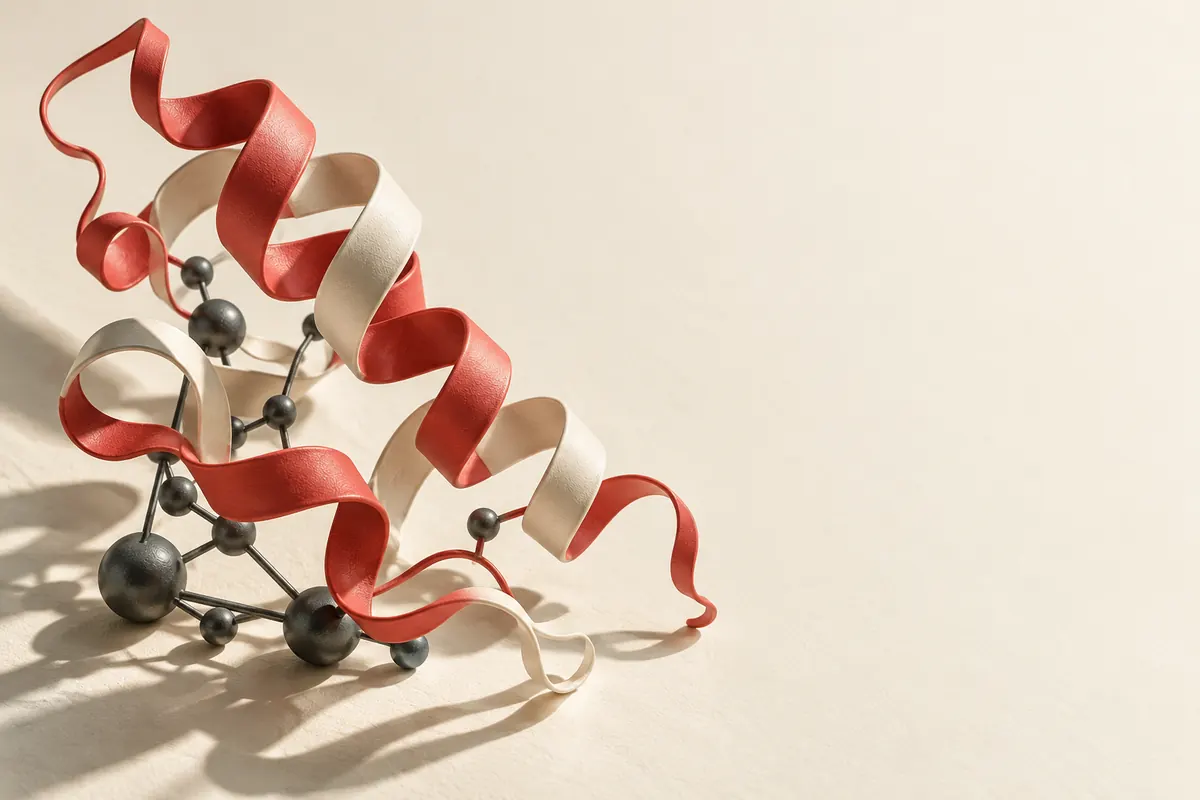
A workbench for antimicrobial-peptide research.
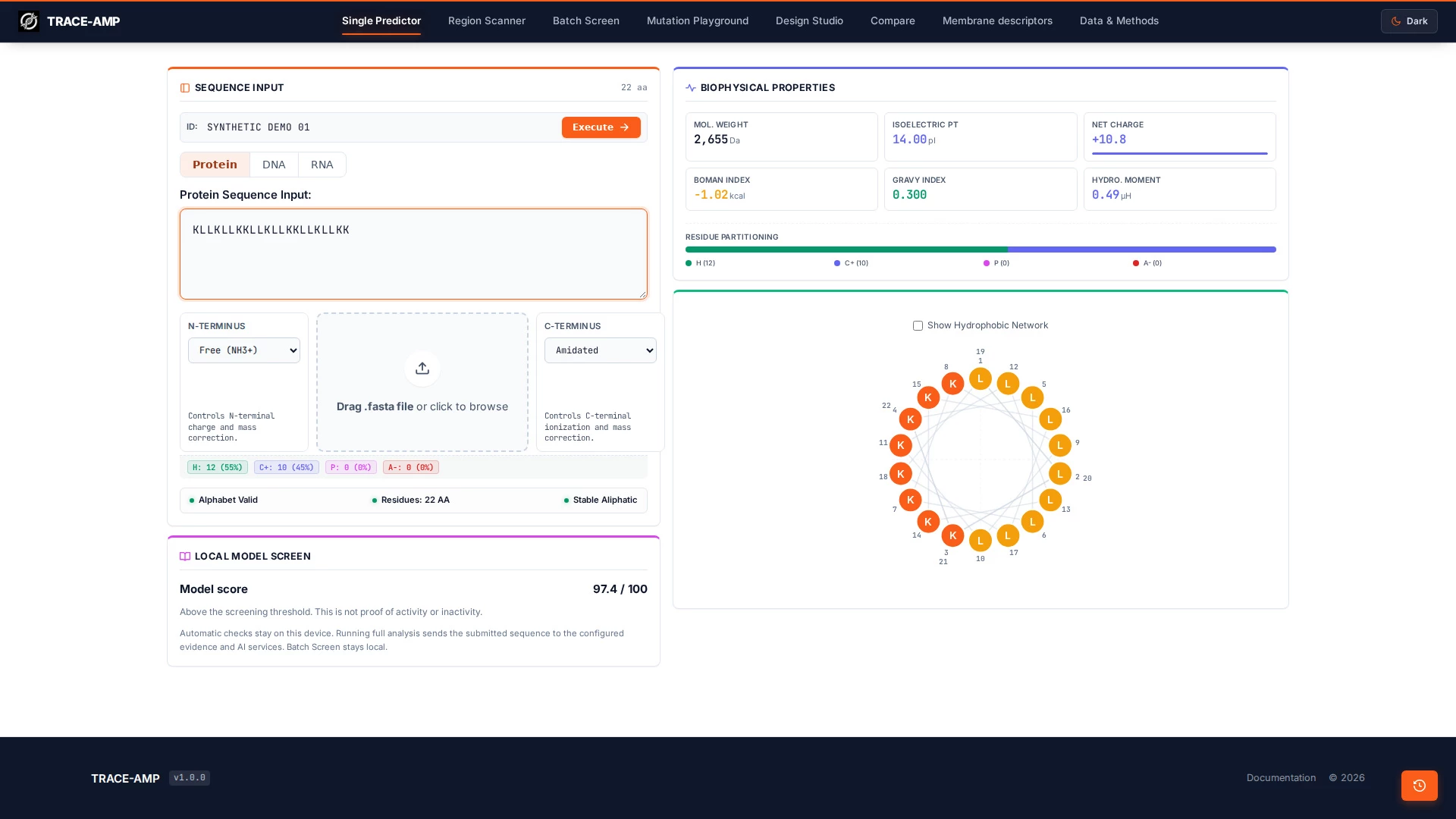
A researcher enters a protein, DNA, or RNA sequence. TRACE-AMP calculates charge, isoelectric point, hydrophobicity, Boman index, GRAVY, and hydrophobic moment in the browser. It then checks external evidence and produces a report that can be saved or shared.
The platform includes a 2D helical wheel, a surface map, and a 3D structure viewer. Researchers can test mutations, design peptides under set constraints, screen batches of up to 50 sequences, and compare up to eight peptides. The application runs on Cloudflare.
- Role
- Product + full-stack
- Audience
- Researchers and students
- Method
- RAG across sources and biophysics
- Output
- Report with sources
Across the screens.
Still frames from the interface demonstration. The examples use synthetic data.
Desktop demonstration
A synthetic sequence, on-device properties and a helical-wheel view. Computational exploration, not laboratory validation.
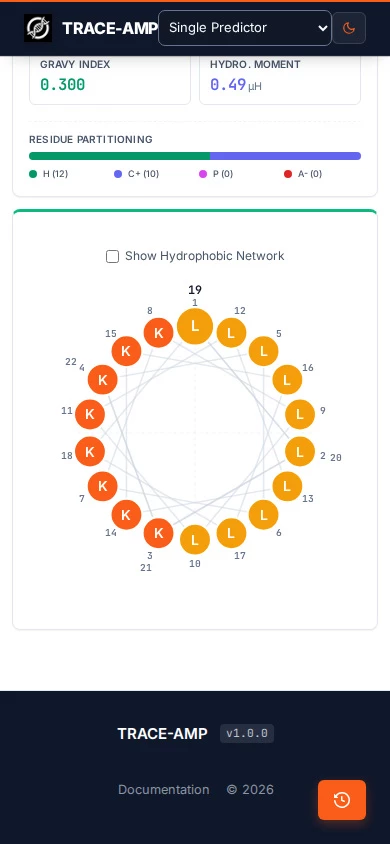
Mobile demonstration
Inspect live peptide properties from a synthetic sequence on a phone. Computational exploration, not laboratory validation.
How it works.
Vizier checks peptide, structure, and literature sources for each sequence.
The search covers UniProt, AlphaFold, ESMFold, PubMed, and a local peptide index.
Vizier queries these sources in parallel.
The model receives matching sequences, structures, and papers.
The report lists the sources used for the result.
Computed properties, predicted structures and retrieved papers support research decisions. They do not establish antimicrobial activity, clinical effectiveness or laboratory validation.
Inside the system.
The flows, sources and review points behind the interface.
The prediction pipeline
Local biophysical calculations and retrieved evidence follow separate paths, then meet in a report. This is a computational research workflow, not laboratory validation.
- SequenceProtein, DNA or RNA
Parallel paths that join at the next step:
- Local biophysicsCalculated in the browser
- Phase ALocal and homology retrieval
- Phase BStructure and literature
- Phase CSynthesis
- ReportResult and evidence
Evidence sources, retrieved in parallel
Vizier queries the peptide index, homology, structure and literature sources in parallel. Each contributes evidence to the report.
- Query sequence
- Vizier
Parallel paths that join at the next step:
- Local peptide indexVectorize
- UniProtHomologs
- AlphaFold / ESMFoldStructure
- PubMedLiterature
- ReportResult with source evidence
Research, with the evidence in view.
Make sequence exploration immediate.
Charge, isoelectric point, hydrophobicity, Boman index, GRAVY and hydrophobic moment are calculated in the browser. Protein, DNA and RNA inputs are supported, including reading-frame translation.
Put the sources beside the result.
The workflow brings together a local peptide index, UniProt, AlphaFold, ESMFold and PubMed. The report retains the sources used, so researchers can examine the evidence behind the synthesis.
Support comparison and revision.
The Mutation Playground and Design Studio support further exploration. The project record includes batches of up to 50 sequences, comparison of up to eight peptides, and PDF or JSON reports.
Built around
the job.
Antimicrobial-peptide workbench.
- Protein, DNA, or RNA input with reading-frame translation
- Real-time charge, pI, hydrophobicity, Boman, GRAVY, and hydrophobic moment
- Search across Vectorize, UniProt, AlphaFold, ESMFold, and PubMed
- 2D wheel, surface map, and 3D structure views
- Mutation Playground and Design Studio
- Batch mode for 50 sequences, comparison for 8 peptides, and PDF or JSON reports
Technology
React 19 · TypeScript · Vite · Cloudflare Workers (Hono) · Workers AI · Vectorize · D1 · UniProt · AlphaFold · ESMFold · PubMed · Gemini
From the product.
System overview drawn from the existing project record. The illustrated workflow is not an application screenshot.
Watch the interface film
A synthetic sequence, on-device properties and a helical-wheel view. Computational exploration, not laboratory validation.
Current local review build · Synthetic demonstration · 2 Oct 2026. This recording uses synthetic demonstration data; it does not establish current release status or real-world performance.
Watch the mobile recording